



The collaboration model between Galaxy and EGI has shown that by hiding the complexity of infrastructures behind user-friendly services, we can democratise access to digital resources. Together, we are building a community where any researcher, anywhere in Europe, has the power to ask big questions and find the answers.
Scientific discovery is increasingly defined by the ability to process massive datasets, yet many researchers face difficulties accessing the computational power they need. To overcome the technical barriers, the Galaxy platform and the EGI Foundation have collaborated to democratize access to digital resources and realise the promise of EOSC.
Here, we describe how the integration of EGI services, such as EGI Check-in for identity management, Infrastructure Manager for automatic deployment of the Pulsar Nodes for distributed job execution, and DataHub for Bring-Your-Own-Storage integration abstracts away infrastructure complexity. By connecting isolated resources into a modular, federated system, this collaboration enabled scientists to perform reproducible, FAIR research across borders without needing advanced administrative skills.
The Scientific Challenge
We are living in the golden age of data. From the microscopic imaging and genomic sequences that help us understand biology and biodiversity to the telescopic data revealing the origins of the universe, scientific discovery is increasingly defined by the ability to process, analyse, and share massive datasets.
But we faced a predictable challenge. As the ambition of European researchers grew, so did the technical barriers. The sheer volume of data and the computational power required to process it began to outpace the resources of individual institutions. Researchers found themselves trapped in "walled gardens." High-Performance Computing, computer centres, and cloud resources exist across Europe, but they are often locked behind complex command-line interfaces, bureaucratic access policies, or institutional silos. A biodiversity researcher studying the impacts of climate change shouldn't have to become a systems administrator to access the compute power needed to annotate a genome. The challenge is not just about having resources; it is about making those resources accessible, interoperable, and findable for the scientists. We should connect the isolated islands of computing resources into a modular connected system. We need a way to execute jobs across international borders without the user ever realising their data was travelling from a storage server in Poland to a compute centre in Italy. Without a solution, the promise of the European Open Science Cloud (EOSC) risked becoming a theoretical concept rather than a practical solution.
About Galaxy
The Galaxy platform has long stood at the forefront of this change, providing a user-friendly, web-based environment that allows researchers, regardless of their computational skills, to perform complex data analyses. Our vision is to empower scientists: a biologist, a climate scientist, a historian, or an astrophysicist should be able to log in, collect their data, and run complex analysis workflows without needing to configure computational systems. The European Galaxy server processes millions of jobs annually, supporting a growing community where training material, tool integration, workflow development, and data sharing are possible in one unified platform. The user base has tripled over the last three years, and the diversity of available tools is increasing at an amazing pace.
To achieve our goals, Galaxy and EGI joined forces to collaborate, leverage available services, bring together communities, and implement large-scale projects. Funded by European Commission projects and hand-in-hand with diverse communities across Europe, we set out to build a sustainable and robust open and modular infrastructure that democratises access to digital resources in Europe and even globally.
By integrating EGI services into the Galaxy platform, we have overcome the technical barriers that once separated researchers from the infrastructure they need and improved the existing solutions. This collaboration isn’t just about connecting tools; it is about architecting and implementing a new model that puts control back in the hands of the research community. Three specific EGI services proved important in this journey.
In a federated environment, identity management is often the first obstacle that should be handled. We needed a way for researchers to carry their digital identities across borders and services without managing dozens of different credentials. By integrating EGI Check-in, we enabled a single, secure sign-on mechanism. This integration connects Galaxy to the broader EOSC ecosystem, allowing users to log in using their institutional credentials or social identities. This simple integration is the backbone of a secure and user-friendly experience, removing the challenges of access management for thousands of scientists.
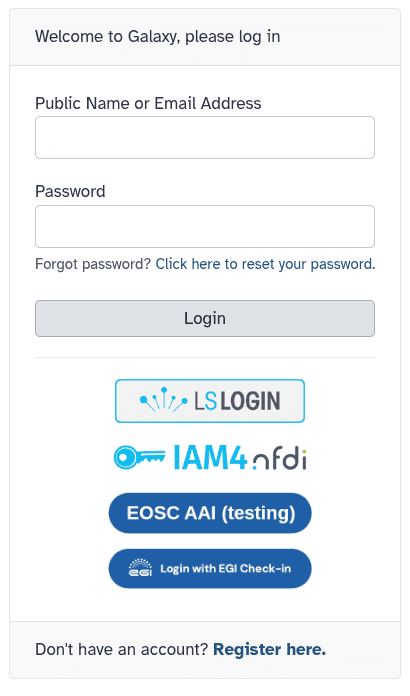
Figure 1. Various Authentication & Authorisation Infrastructure (AAI) login options are available on https://usegalaxy.eu/
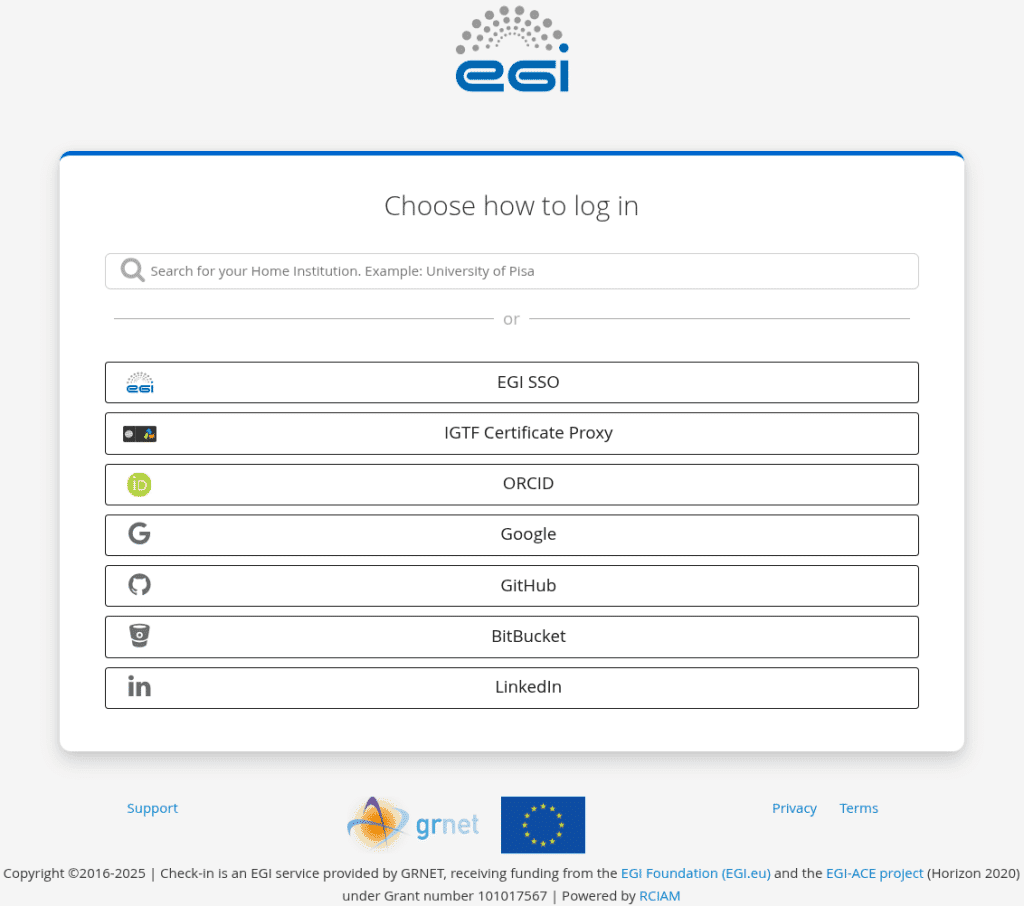
Figure 2. EGI Check-in provides various options to login into Galaxy Platform
A Federated Infrastructure
As scientific datasets swell to petabyte scales, centralised compute centres face critical bottlenecks: queue times skyrocket, and transferring massive files across the internet becomes prohibitively slow, expensive, and carbon-intensive. Therefore, the community architected the Pulsar Network, which is a federated system that decouples job execution from the Galaxy interface. By installing Pulsar at remote high-performance computing centres and clouds, we can bring the computation to where the data resides. Expanding this network with more nodes is important because it scales processing power to handle massive workloads, provides access to specialised hardware like GPUs, and reduces the global carbon footprint by eliminating the need to transmit datasets across the network. During the last few years, more and more EGI partners provided Pulsar Nodes to the Pulsar network and improved its stability and robustness. Now, it is possible to use the EGI Infrastructure Manager dashboard to automate the deployment of these Pulsar endpoints and ARC Job Runners. This means a researcher can now process massive datasets on a powerful cloud cluster in another country while interacting with the familiar Galaxy interface. The complexity of the infrastructure administration is completely abstracted away. Additionally, now Galaxy can be deployed on different Nodes of the EOSC Federation using the Infrastructure Manager as demonstrated in this video:
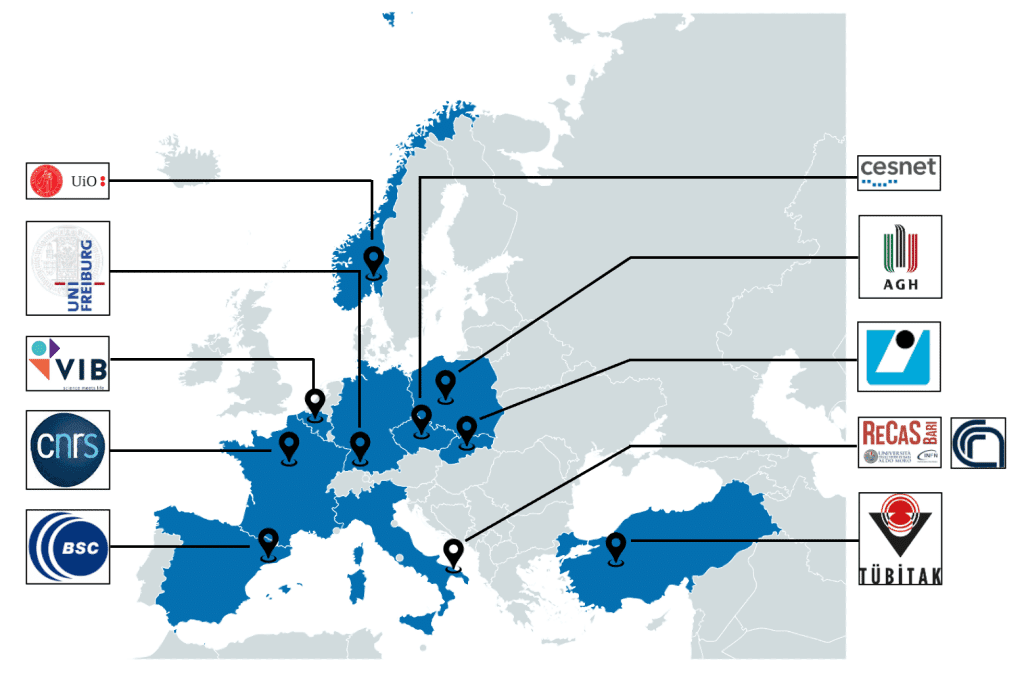
Figure 3. Pulsar endpoints connected to the Pulsar Network from various European infrastructure centres
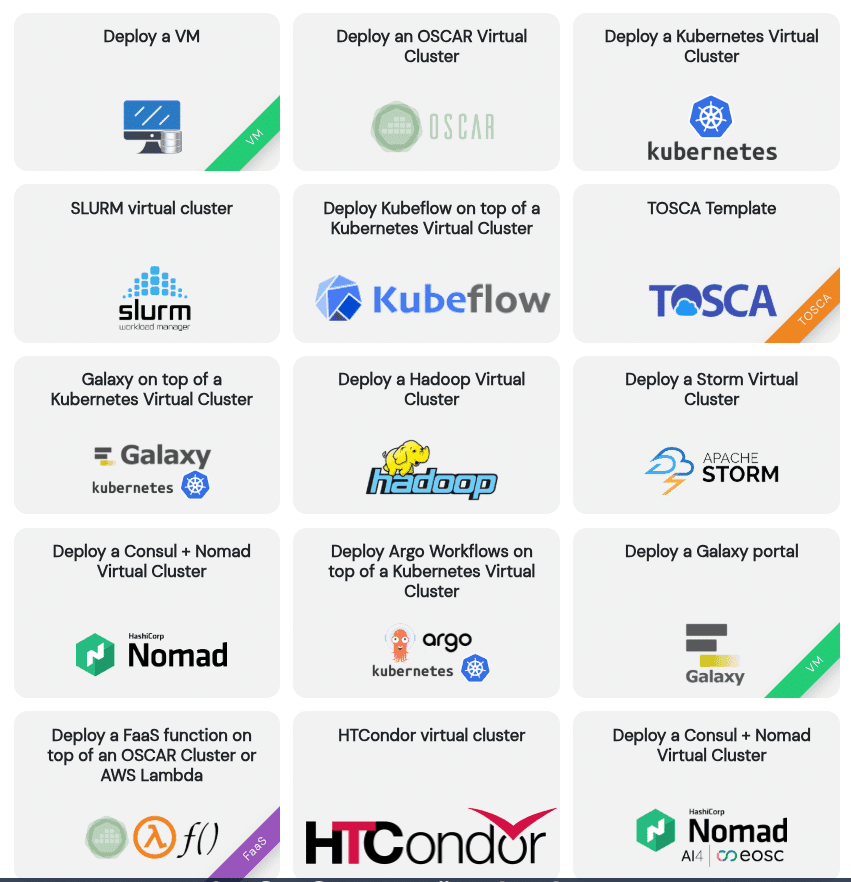
Figure 4. Various options for deploying a Galaxy instance using the Infrastructure Manager dashboard
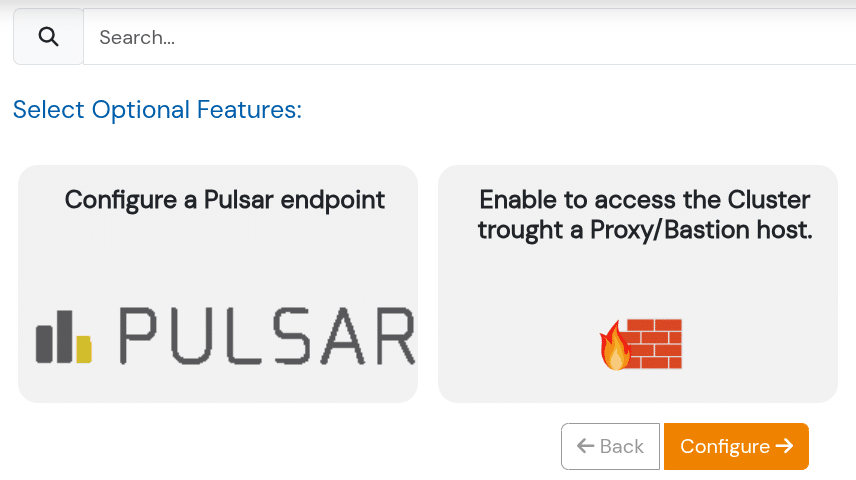
Figure 5. Infrastructure Manager dashboard for automatic deployment of a Pulsar endpoint in a HTCondur virtual cluster
Processing power is useless if scientists can't access their data. A successful example of our Bring Your Own Storage concept is the collaboration with OneData and EGI’s DataHub. This allows researchers to connect their own storage buckets directly to Galaxy. Whether it is training data for the Galaxy Training Network or huge experimental datasets, users can now link storage resources to their Galaxy accounts just with a few clicks.
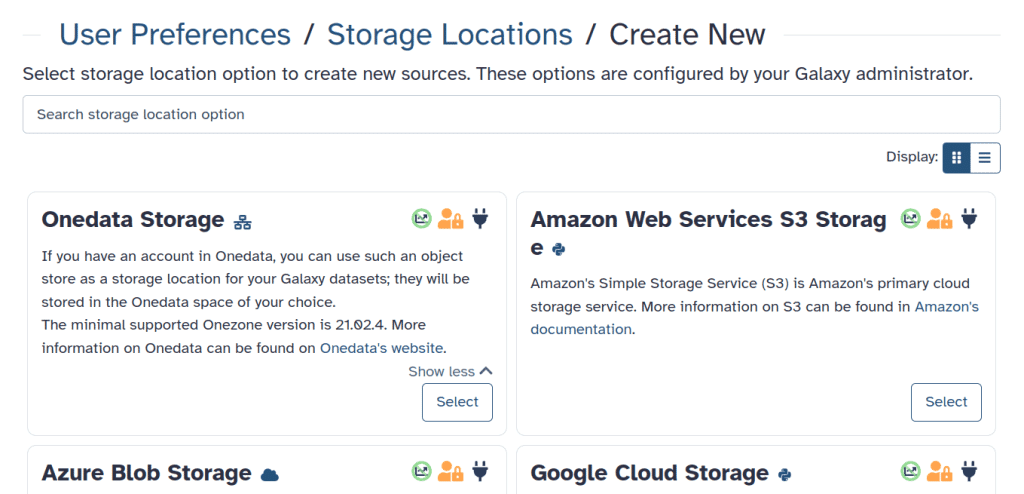
Figure 6. The Onedata storage among other options to be connected to Galaxy for extending the storage availability of a user.
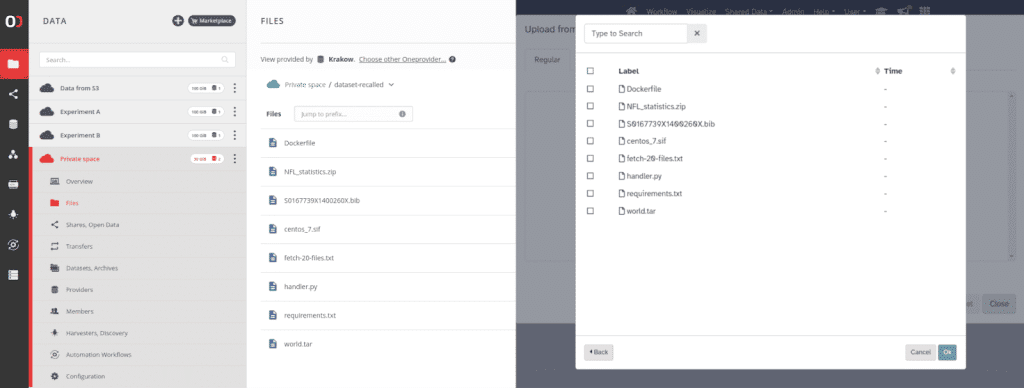
Figure 7. The Onedata file browser UI and the Galaxy Upload tool enable importing data from Onedata Spaces. It is important to mention that it is also possible to send the results back to OneData Spaces from Galaxy.
The collaboration between Galaxy and EGI has demonstrated that federated infrastructure is not just a dream, but a practical reality that drives science forward. Biologists performing large-scale genome analyses no longer need to use complex command-line tools. Through Bring Your Own Storage and Compute, they can access computational infrastructure across Europe using their credentials, focusing on biological discovery rather than system administration. Astrophysicists processing massive telescopic datasets can utilise the Pulsar Network to run analyses on remote nodes where the data is stored. This eliminates the need to transfer petabytes of data across the internet, significantly reducing latency and network costs. Historians can integrate data repositories from any Museum API into Galaxy just with a few clicks to investigate their questions using the Galaxy platform.
As we look toward the future of EOSC, the collaboration model established between Galaxy and EGI has shown that by hiding the complexity of infrastructures behind user-friendly services, we can democratise access to digital resources. Together, we are building a community where any researcher, anywhere in Europe, has the power to ask big questions and find the answers.
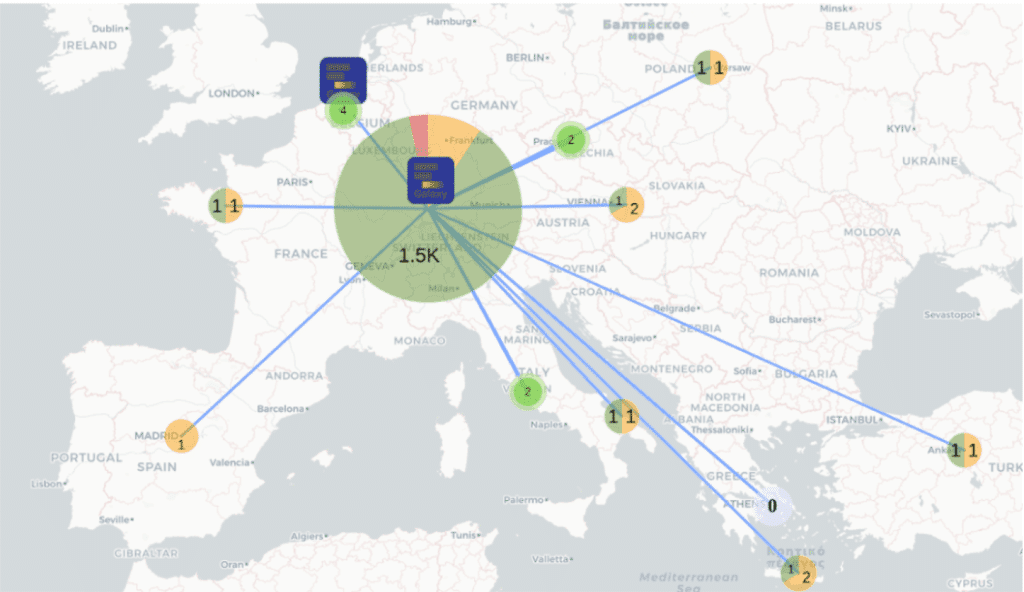
Figure 8. Galaxy Job Radar displays the distribution of computational tasks being calculated at different locations across Europe.
Related magazine news



A decade of empowering scientific research: the EGI Federated Cloud marks 10 years of operations

EuroScienceGateway will deliver a robust, scalable, seamlessly integrated open infrastructure for data-driven research, contributing an
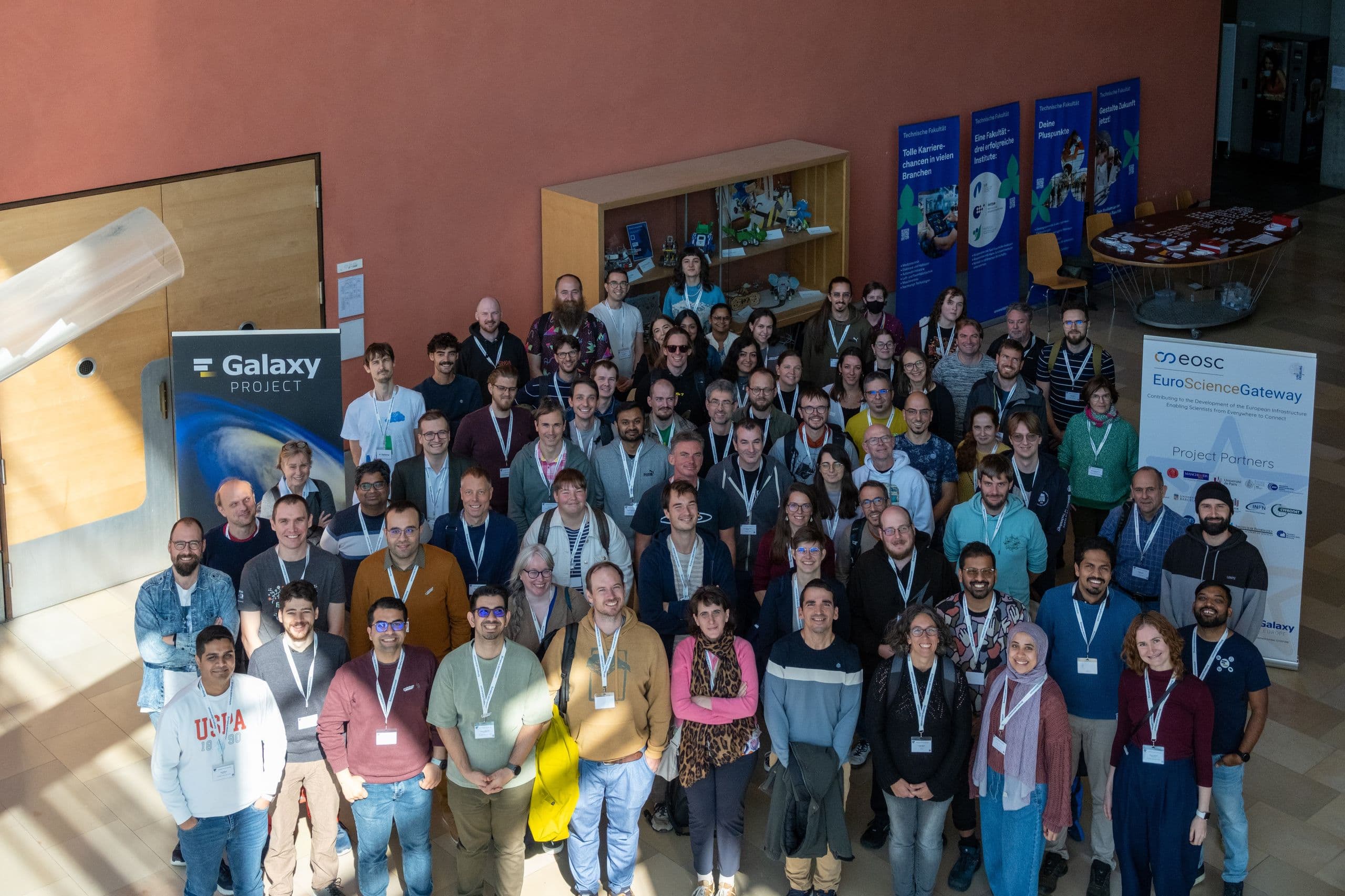
The European Galaxy Days 2025 (1–3 October 2025, Freiburg, Germany) brought together researchers, developers, and




Read how EGI simplifies the deployment process of Pulsar endpoints in the EGI Federated Cloud,